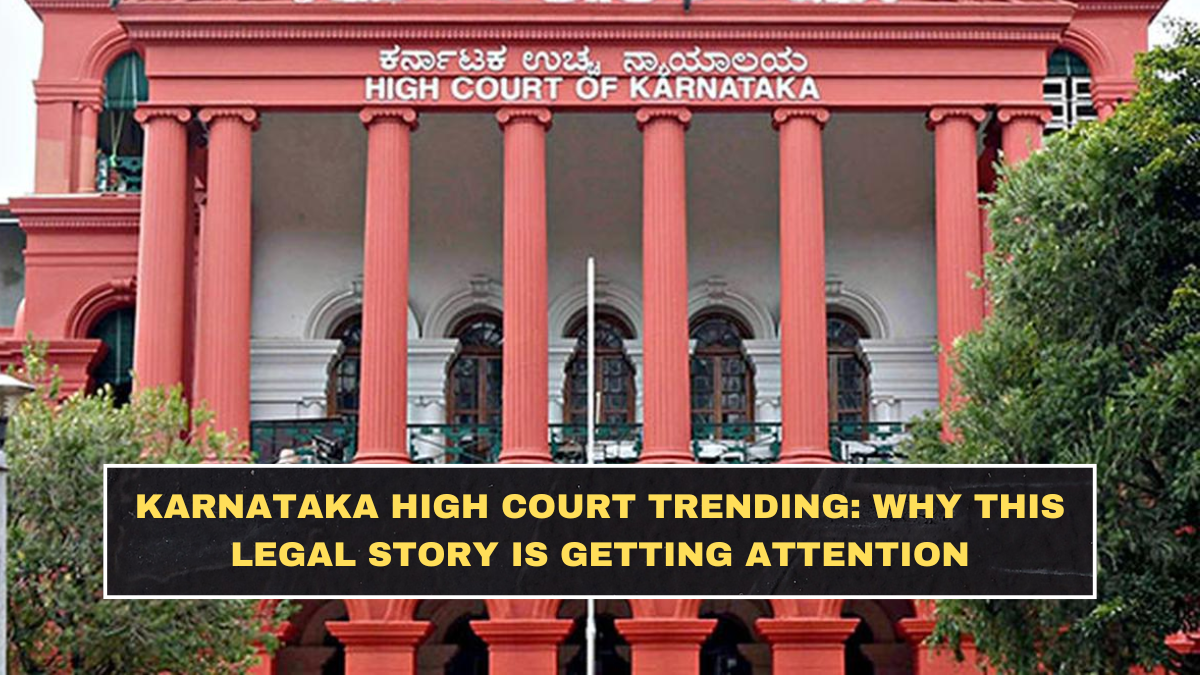
Karnataka High Court is trending because several recent legal developments from the court have caught public attention at the same time. These include cases involving bike taxis, menstrual leave policy, bail conditions, religious-cultural activities, social media privacy, and proceedings involving public figures. When multiple court orders touch daily life, transport, work rights, women’s safety, and online behaviour, search interest naturally rises.
The court’s official cause list for April 27, 2026, also showed regular physical hearing and video conferencing options before different benches, confirming that court activity was continuing across Bengaluru and other benches. The High Court’s official website also listed recent notifications, recruitment updates, judicial transfers, and latest judgments/orders, which often pushes court-related searches higher among lawyers, litigants, and job seekers.
But the bigger point is this: people usually search courts only when a judgment affects them personally or socially. Karnataka High Court is not trending because of one random case. It is trending because recent orders are touching issues that ordinary people understand without needing a law degree.

Which Recent Karnataka High Court Matters Are Getting Attention?
Several recent matters have made the Karnataka High Court visible in public discussion. One major issue is the bike taxi case. The Karnataka government has reportedly decided to appeal in the Supreme Court against a High Court judgment allowing bike taxis, showing that the dispute over app-based two-wheeler transport is not settled yet.
Another important development is the menstrual leave policy. A legal analysis noted that the Karnataka High Court, by order dated April 15, 2026, upheld the constitutional validity of Karnataka’s Menstrual Leave Policy, 2025, and connected it to constitutional protections around equality, dignity, health, and working conditions.
| Recent Issue | Why It Matters | Who Is Affected |
|---|---|---|
| Bike taxi case | Decides future of app-based two-wheeler mobility | Riders, drivers, aggregators, transport department |
| Menstrual leave policy | Links workplace health to dignity and equality | Women employees and employers |
| Bail location-sharing | Limits continuous surveillance as a bail condition | Accused persons, police, courts |
| Social media privacy case | Concerns non-consensual videos of women | Women commuters, online users |
| Religious-cultural activities | Raises secularism and public-culture debate | Citizens, institutions, communities |
Why Does The Bike Taxi Case Matter?
The bike taxi case matters because it affects urban mobility, gig workers, app platforms, and transport regulation. Bike taxis are popular because they are often cheaper and faster in traffic-heavy cities like Bengaluru. For commuters, they solve a real problem. For drivers, they create income. For regulators, they raise safety, licensing, insurance, and compliance questions.
Economic Times reported that the Karnataka government will appeal to the Supreme Court against the High Court judgment allowing bike taxis in the state. The government’s move shows that it still has concerns about safety and regulatory framework, even after the High Court decision.
This is not a simple “ban or allow” debate. If the state blocks bike taxis without a better public transport alternative, commuters suffer. If platforms operate without clear rules, safety and accountability suffer. The mature answer is regulation, not chaos. Karnataka needs clear rules instead of repeated legal fights.
Why Is The Menstrual Leave Order Important?
The menstrual leave order is important because it treats menstrual health as a workplace dignity issue, not a private inconvenience that women must silently manage. The legal update by L&E Global said the Karnataka High Court upheld the constitutional validity of the state’s menstrual leave policy and recognised menstrual leave as connected to Articles 14, 15(3), 21, 39(e), and 42 of the Constitution.
This matters especially for women in the unorganised sector, where workplace protections are often weak. Policies may exist on paper, but implementation is usually the real failure. A court direction can push the state and employers to take enforcement more seriously.
Still, there is a practical challenge. Employers need clear guidelines so the policy is not reduced to paperwork or misused as token compliance. Women workers need access without stigma. The government needs monitoring. A right that cannot be used safely in real life is not much of a right.
What Did The Court Say About Bail And Location Sharing?
The Karnataka High Court recently held that continuous mobile location-sharing cannot be imposed as a bail condition because it amounts to ongoing electronic surveillance. LawStreet reported that the court quashed a bail condition requiring an accused to keep mobile location turned on at all times and share live location with the investigating officer.
This matters because bail conditions must protect investigation and public interest, but they cannot become unlimited surveillance. Courts can impose reasonable restrictions, but forcing someone to be digitally tracked continuously raises privacy and liberty concerns.
This is a serious issue in the digital age. Police convenience cannot automatically override constitutional rights. If courts allow constant location tracking casually, bail can become punishment before trial. That would be dangerous because an accused person is not automatically guilty.
Why Is The Social Media Privacy Case Important?
The social media privacy case is important because it deals with non-consensual videos of women in public transport. LiveLaw reported that the Karnataka High Court refused to quash criminal proceedings against the alleged owner of the “Bangalore Metro Chicks” Instagram account over objectionable, non-consensual videos of women travelling in Bengaluru Metro.
This case matters because many people still treat filming strangers in public as harmless content. It is not harmless when women are recorded, sexualised, mocked, or posted online without consent. Public spaces are not permission slips for digital exploitation.
The court’s refusal to quash the case sends a signal that online accounts cannot hide behind entertainment when privacy and dignity are violated. Bengaluru’s metro system is used by lakhs of commuters. Women should not have to worry that a normal commute can become someone’s viral content.
Why Should Ordinary Readers Care About High Court Updates?
Ordinary readers should care because High Court orders shape real life. A transport ruling can decide whether bike taxis operate. A workplace rights order can affect leave policies. A bail order can define privacy limits. A social media case can influence online safety standards. These are not abstract legal debates.
The High Court also handles recruitment notifications, transfer orders, commercial disputes, criminal cases, public interest litigation, and constitutional challenges. Its official site currently lists notices such as Group-D recruitment, Civil Judge applications, judicial transfers, and latest judgments/orders.
The blind spot many people have is thinking law matters only when they personally have a case. That is wrong. Court decisions quietly shape how cities run, how employers behave, how police act, and how digital platforms are treated. Ignoring legal developments means ignoring the rules that govern daily life.
Conclusion?
Karnataka High Court is trending because recent legal developments touch transport, workplace rights, privacy, women’s safety, bail conditions, and public culture. These are issues people can directly connect with, which is why searches around the court have risen.
The court’s recent activity shows how law is not limited to lawyers and judges. It affects commuters, workers, app users, women, accused persons, businesses, and government departments. The smart way to follow such stories is to look beyond headlines and understand what the order actually changes.
FAQs
Why Is Karnataka High Court Trending Today?
Karnataka High Court is trending because of multiple recent legal developments involving bike taxis, menstrual leave, bail conditions, social media privacy, and other public-interest matters. These cases affect daily life, so public search interest has increased.
What Is The Bike Taxi Case About?
The bike taxi case is about whether app-based bike taxi services can operate in Karnataka and under what regulatory conditions. The Karnataka government is reportedly planning to appeal against the High Court ruling that allowed bike taxis.
What Did The Karnataka High Court Say About Menstrual Leave?
The court upheld Karnataka’s menstrual leave policy and linked menstrual health to dignity, equality, and workplace rights. The order is important because it pushes implementation of protections for women employees.
Why Is The Bail Location-Sharing Order Important?
The bail location-sharing order is important because the court said continuous mobile location tracking cannot be imposed as a bail condition. It protects privacy and prevents bail from becoming constant digital surveillance.