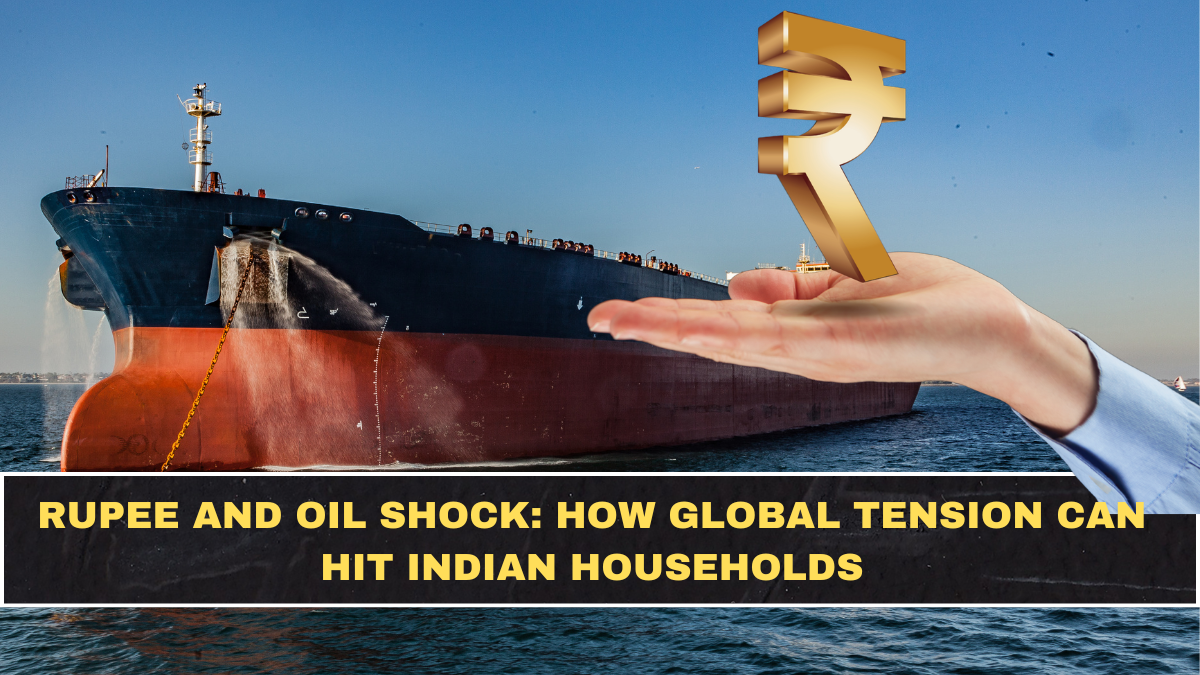
The rupee and oil shock matters because India buys a large part of its crude oil from abroad, and crude is mostly traded in dollars. When oil becomes expensive, Indian companies need more dollars to pay import bills. That extra dollar demand can put pressure on the rupee, especially when global investors are already nervous.
On May 8, 2026, Reuters reported that the rupee weakened as rising oil prices and renewed US-Iran hostilities hurt sentiment. Brent crude had moved from around $96 to $101 per barrel after fresh Gulf tensions, while state-run banks reportedly helped cushion the rupee’s fall through dollar sales.
How Does Hormuz Hit India?
The Strait of Hormuz is one of the world’s most important oil routes, so any tension there immediately becomes an India problem. The US Energy Information Administration said oil flow through Hormuz averaged about 20 million barrels per day in 2024, equal to roughly 20% of global petroleum liquids consumption. That is why even a partial disruption can scare markets quickly.
India has tried to reduce risk by diversifying crude purchases. A government release said India now imports crude from around 40 countries and that about 70% of crude imports are coming from routes outside Hormuz, compared with about 55% earlier. That helps, but it does not make India immune because global oil prices still rise when Hormuz looks unsafe.
| Shock Point | How It Hits India |
|---|---|
| Higher crude oil | Raises India’s import bill |
| Weak rupee | Makes dollar-priced imports costlier |
| Fuel pressure | Can raise transport and logistics costs |
| Inflation risk | Food, services and daily goods may become costlier |
| Market fear | Stocks, bonds and foreign flows can turn volatile |
Why Can Households Feel The Pain?
Households feel the pain because oil does not stay limited to petrol pumps. Diesel moves trucks, buses, farm goods, groceries, construction material and delivery networks. When fuel becomes expensive, transport costs rise, and those costs slowly enter everyday prices.
Reuters reported that India’s April 2026 consumer inflation was expected to rise to 3.8%, with higher fuel costs linked to the ongoing US-Iran conflict and elevated global energy prices. The report also noted that energy pressure, especially cooking fuel, was beginning to affect inflation expectations.
What Happens If The Rupee Falls More?
A weaker rupee makes imports costlier, especially crude oil, edible oil, electronics, fertilisers and some industrial inputs. This can widen India’s trade deficit and increase pressure on the current account. In simple language, India has to spend more rupees to buy the same dollar-priced goods.
This is the double hit people ignore. Expensive oil already hurts India, but expensive oil plus a weaker rupee hurts harder. Business Standard reported that India’s monthly energy import bill, which earlier averaged around $10–11 billion before the conflict, had risen sharply amid the energy shock.
Can The Government Control The Damage?
The government and RBI can soften the shock, but they cannot delete it. The RBI can intervene in the currency market, oil companies can absorb some pressure, and the government can adjust taxes if needed. But all these tools have limits because someone eventually pays the cost.
The government has also highlighted supply security and diversification as a cushion. That is sensible, but people should not confuse “secure supply” with “cheap supply.” India may still receive enough crude, but if the global price is high, the economic pain still reaches the import bill, rupee and inflation.
What Should People Watch Now?
The smart approach is not panic, but tracking the right signals. Do not blindly believe WhatsApp claims about petrol prices, rupee collapse or fuel shortages. Watch official data and credible market indicators instead, because fake panic can create more confusion than the actual shock.
Key things to watch now:
- Indian crude basket price: PPAC data showed the Indian basket at $104.04 per barrel on May 6, 2026.
- Rupee-dollar level: A sharp fall makes imports more expensive.
- Retail fuel decisions: Petrol and diesel prices depend on policy and company pricing.
- Inflation data: Fuel pressure can enter food, transport and service costs.
- Hormuz security: Fresh attacks or shipping delays can push prices higher.
Conclusion?
The rupee and oil shock is dangerous because it quietly enters ordinary life. It can weaken the rupee, raise import bills, pressure inflation and make transport-heavy goods costlier. This is not only a market story; it can become a kitchen-budget, school-transport and monthly-expense story.
The harsh truth is that India has improved its oil-supply strategy, but it still cannot escape global oil math. If Hormuz tension continues and crude remains expensive, households may not feel the hit in one dramatic moment. They may feel it slowly through fuel costs, food prices, services and weaker purchasing power.
FAQs?
Why Does Oil Price Affect The Rupee?
Oil affects the rupee because India pays for crude imports mainly in dollars. When crude becomes expensive, India needs more dollars, which increases pressure on the rupee. If investor sentiment is also weak, the rupee can fall faster against the dollar.
Can Hormuz Tension Raise Inflation In India?
Yes, Hormuz tension can raise inflation if it pushes global crude prices higher. Fuel affects transport, logistics, cooking gas and many daily-use goods indirectly. Even if petrol prices do not rise immediately, inflation pressure can build through supply chains.
Is India Fully Dependent On Hormuz For Oil?
No, India has diversified its crude imports and now buys from many countries. The government has said around 70% of crude imports are coming from routes outside Hormuz. Still, India remains exposed because global oil prices react to Hormuz tension even when supply routes are diversified.
Will Petrol And Diesel Prices Rise Immediately?
An immediate rise is not guaranteed unless the government or oil companies announce it. Retail fuel prices depend on crude costs, taxes, company margins and policy decisions. However, if global crude remains high for long, pressure on fuel pricing becomes harder to avoid.