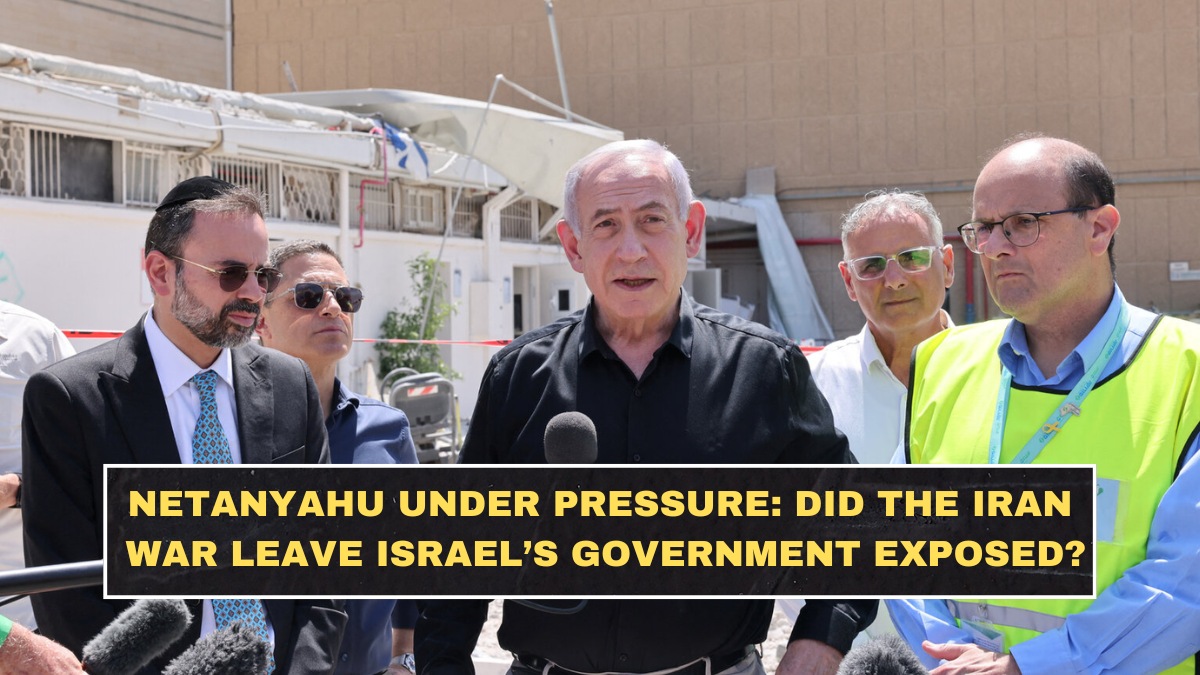
Benjamin Netanyahu is under pressure because Israel’s latest war aims appear only partly achieved, while the political cost is still growing. Netanyahu has presented the conflict as a historic success, but critics argue the core goals remain unfinished: Iran’s nuclear programme has not been permanently neutralised, Hezbollah has not been fully removed as a threat, and Israel remains stuck in a wider regional security crisis.
Reuters reported that Netanyahu has struggled to turn Israel’s military firepower into clear political gains from the Iran war. The report noted that even after major strikes, Israeli politics remained tense because the war did not produce the kind of decisive outcome Netanyahu’s supporters expected. That is the central problem for him now: military action created drama, but not necessarily closure.
What Were Netanyahu’s Main War Goals?
Netanyahu’s stated goals were built around security: weaken Iran, stop nuclear progress, protect Israel from missile and drone threats, and reduce the pressure from Iran-backed groups such as Hezbollah. These are serious goals, not campaign slogans. The problem is that they are also extremely difficult to complete through military action alone.
A statement archived by the Center for Israel Education showed Netanyahu describing the war as a campaign with “historic accomplishments,” but also making clear that the campaign was not finished. That language is politically useful because it allows him to claim success while keeping future military options open. But it also exposes him to criticism: if the war is not finished, then voters can ask what was actually achieved.
| Netanyahu’s Challenge | Why It Hurts Politically |
|---|---|
| Iran’s nuclear issue remains unresolved | Critics say the main threat still exists |
| Hezbollah is still active | Northern Israel remains insecure |
| Ceasefires look fragile | Hardliners say Netanyahu stopped too early |
| Opposition is uniting | Rivals can attack him from the security side |
| Coalition pressure continues | Far-right partners may demand tougher action |
Why Are Hardliners Unhappy With Him?
Hardliners are unhappy because they believe Netanyahu accepted pauses and ceasefires before Israel finished the job. In Israeli politics, that is dangerous for him because much of his strength comes from being seen as the leader who is toughest on security. If far-right allies or nationalist voters decide he is compromising too much, his political brand weakens.
The Washington Post reported that Netanyahu said he accepted a truce at Trump’s request but added that Israel was “not finished yet” with Hezbollah. The same report noted that Israeli forces were still occupying a deep strip of southern Lebanon, showing how incomplete the ceasefire picture remains. That leaves Netanyahu squeezed between US pressure for restraint and domestic pressure for escalation.
How Is Ben Gvir A Problem For Netanyahu?
Itamar Ben Gvir and other hardline figures are a problem because Netanyahu depends on right-wing coalition support to stay in power. If they believe he is going soft, they can threaten the stability of the government. That does not mean they will immediately collapse the coalition, but it gives them leverage over policy, messaging, and future military decisions.
This is the trap Netanyahu built for himself. His coalition gives him power, but it also limits his flexibility. If he moves toward diplomacy, hardliners accuse him of weakness. If he keeps escalating, international pressure grows and Israel’s security risks deepen. That is not strong leadership territory; it is political survival mode.
Why Is The Opposition Suddenly More Dangerous?
The opposition is more dangerous because Netanyahu’s rivals are joining forces. Reuters reported that former prime ministers Naftali Bennett and Yair Lapid have formed a new political alliance called “BeYachad,” meaning “Together,” to challenge Netanyahu in upcoming elections. Their focus includes domestic issues such as ultra-Orthodox military conscription, but they are also criticising Netanyahu’s inability to achieve decisive security outcomes.
This matters because Bennett and Lapid are not attacking Netanyahu from a soft-left position on security. Reuters noted that their security approach on Iran, Gaza, Lebanon, and Palestinian statehood is largely hardline as well. That makes them more dangerous to Netanyahu because they can argue: “We also support strong security, but you failed to deliver results.”
Did The Iran War Help Netanyahu Politically?
It helped him briefly, but not enough. Wars often create a short-term rally effect around sitting leaders, especially in countries facing direct security threats. Netanyahu likely benefited from the immediate sense of national emergency. But that effect fades quickly if the public feels the war ended without decisive results.
Al Jazeera reported that Netanyahu faced backlash for appearing to oversell and underdeliver on the Iran conflict, while opposition leaders supported the war in principle but questioned whether his government achieved enough. That is a brutal political position: Netanyahu cannot easily accuse every critic of being anti-security when many of them supported military action but still say he failed.
Why Is Lebanon Making Netanyahu’s Problem Worse?
Lebanon makes Netanyahu’s problem worse because Hezbollah remains active despite the ceasefire. Reuters reported that Israeli strikes expanded into eastern Lebanon’s Bekaa Valley after a US-brokered ceasefire began, while Hezbollah continued attacks on Israeli targets. That means the northern front is not settled, and Netanyahu cannot honestly claim the Hezbollah threat is over.
For Israeli voters in northern areas, the question is practical: can they return home safely, or not? If the answer is still uncertain, Netanyahu’s security claims look weaker. A leader can give speeches about deterrence, but displaced families judge success by whether daily life becomes safe again.
What Is Trump’s Role In Netanyahu’s Pressure?
Trump’s role is complicated. Netanyahu needs strong US backing, especially during conflicts involving Iran, Lebanon, and wider regional diplomacy. But if Trump pushes Israel toward ceasefires or talks before Netanyahu satisfies his domestic base, that creates political trouble. Netanyahu cannot easily reject Washington, but he also cannot appear as if he is taking orders from it.
This is why the truce issue is so sensitive. If Netanyahu accepted a ceasefire because Trump wanted it, hardliners can say Israel stopped for American politics rather than Israeli victory. If Netanyahu rejects US pressure, he risks damaging the most important alliance Israel has. Either way, he pays a price.
Could Netanyahu’s Government Fall?
It could, but collapse is not automatic. Israeli coalitions often survive intense pressure because smaller parties also fear elections. Hardliners may threaten Netanyahu, but they must calculate whether early elections would strengthen or weaken them. The opposition alliance also changes the equation because Netanyahu’s rivals now have a clearer vehicle to challenge him.
The bigger risk for Netanyahu is not one dramatic collapse tomorrow. It is slow erosion. If security problems continue, hostages or border residents remain unresolved, Iran’s nuclear issue stays alive, and the economy absorbs war costs, voters may become more open to replacing him with another hardline but less politically exhausted leader.
Conclusion
Netanyahu’s problem is not that Israel used too little force. His problem is that force has not delivered a clean political ending. Iran remains a strategic threat, Hezbollah remains active, ceasefires look fragile, and his rivals are organising. At the same time, hardliners inside his own camp want tougher action, while the US wants restraint and diplomacy.
The blunt truth is that Netanyahu is trapped between victory language and unfinished reality. He can claim historic achievements, but voters and rivals will ask the harder question: if Israel won, why does the war still feel unresolved?
FAQs
Why is Netanyahu under pressure after the Iran war?
Netanyahu is under pressure because critics say Israel’s major war goals remain unfinished. Iran’s nuclear issue is unresolved, Hezbollah remains active, and ceasefires with regional enemies look fragile rather than decisive.
Are Netanyahu’s rivals becoming stronger?
Yes. Reuters reported that Naftali Bennett and Yair Lapid have joined forces in a new political alliance called BeYachad to challenge Netanyahu in upcoming elections. Their criticism is dangerous because they also take a hardline security position.
Why are hardliners unhappy with Netanyahu?
Hardliners believe Netanyahu accepted ceasefires and pauses before Israel fully achieved its military goals. They want tougher action against Iran-backed forces, especially Hezbollah, and may pressure him inside the coalition.
Could Netanyahu lose power over this?
He could, but it is not guaranteed. His coalition may survive if right-wing partners fear elections. However, if security problems continue and the opposition stays united, Netanyahu’s political position could weaken further.