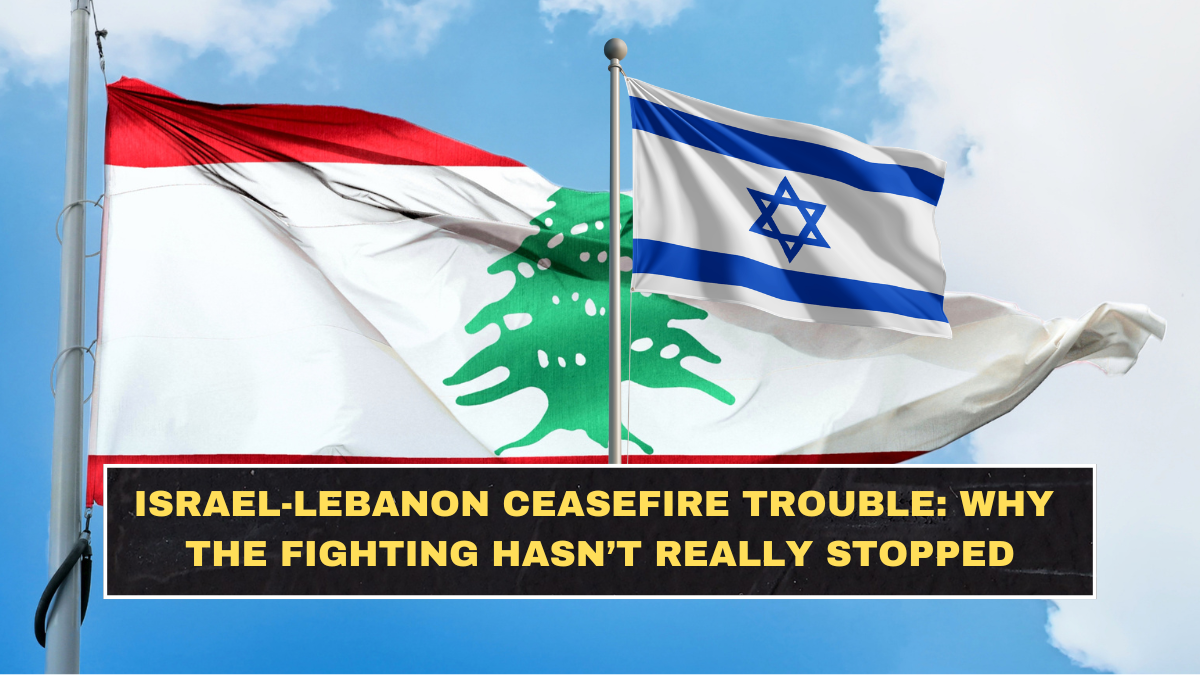
The Israel-Lebanon ceasefire is under pressure because the fighting never fully stopped. A US-brokered truce began on April 16, 2026, but Israeli strikes and Hezbollah-linked attacks have continued, turning the agreement into a fragile pause rather than a real end to hostilities. That is why people in southern Lebanon and northern Israel are still living with fear instead of relief.
Reuters reported that Israeli strikes expanded into eastern Lebanon’s Bekaa Valley on April 27, marking the first time that area had been hit since the ceasefire began. Israel said it was targeting Hezbollah infrastructure, while Hezbollah continued drone and rocket attacks on Israeli targets. In simple words, both sides are still acting as if the war is active, even while the word “ceasefire” remains in use.
What Was The Ceasefire Supposed To Do?
The ceasefire was supposed to reduce fighting between Israel and Hezbollah and support wider efforts to calm the region after weeks of war involving Iran, Israel, and the United States. AP reported that a 10-day truce began in Lebanon on April 16, with hopes that it could pause fighting and support broader diplomacy. But a temporary truce only works if both sides believe the cost of breaking it is higher than the benefit of continuing attacks.
That is the problem here. Israel says Hezbollah continues to threaten northern Israel and violate the spirit of the truce. Hezbollah says Israeli attacks and occupation make the ceasefire meaningless. Lebanon’s government is stuck between both: it wants negotiations and stability, but Hezbollah remains powerful enough to challenge the state’s authority over war and peace.
| Ceasefire Issue | What Is Happening? | Why It Matters? |
|---|---|---|
| Israeli strikes | Continued in south and expanded east | Shows Israel still sees Hezbollah as active threat |
| Hezbollah attacks | Drones and rockets reportedly continue | Keeps northern Israel under alert |
| Lebanon government | Supports talks but faces Hezbollah resistance | Exposes internal political division |
| Civilian safety | Border communities remain at risk | Makes “ceasefire” feel meaningless locally |
| Regional risk | Conflict links to Iran-US-Israel tensions | Could restart wider escalation |
Why Is Israel Still Striking Lebanon?
Israel says it is striking Hezbollah infrastructure and responding to continued attacks. From Israel’s view, a ceasefire cannot mean allowing Hezbollah to regroup, move weapons, or keep firing drones and rockets across the border. Reuters reported that Israel said it would attack Hezbollah “forcefully” after strikes in southern Lebanon killed four people, while Israeli officials continued accusing Hezbollah of violating the truce.
But the other side of this argument is also serious. Lebanese officials and international observers say continued Israeli strikes undermine the ceasefire and deepen civilian suffering. If Israel keeps striking whenever it identifies a threat, and Hezbollah keeps firing whenever it says Israel has violated the deal, the truce becomes a legal wrapper around an active war.
What Is Hezbollah’s Position On The Ceasefire?
Hezbollah has dismissed the ceasefire as ineffective because Israeli attacks have continued. Reuters reported that a Hezbollah lawmaker called the ceasefire “meaningless” in light of ongoing Israeli attacks, while Lebanon’s health ministry said Israeli strikes had killed people in southern Lebanon. Hezbollah also opposes direct peace talks with Israel and rejects any agreement it sees as humiliating or imposed.
This is where Lebanon’s internal crisis becomes unavoidable. Hezbollah is not only a militant group; it is also a political force inside Lebanon. If Lebanon’s official government wants negotiations but Hezbollah rejects them, the country speaks with two conflicting voices. That weakens Lebanon’s position and makes any ceasefire harder to enforce.
Why Is Southern Lebanon Still The Main Flashpoint?
Southern Lebanon is still the main flashpoint because it is where Israeli troops, Hezbollah fighters, border villages, and UN monitoring efforts collide. The area has a long history of conflict, and the current war has made it even more unstable. Israeli forces have maintained a presence in parts of southern Lebanon, while Hezbollah continues to frame its armed activity as resistance.
Al Jazeera reported that the UN human rights office warned recent Israeli attacks in Lebanon and Hezbollah rocket fire into Israel may amount to serious violations of international humanitarian law. That matters because the issue is not only who fired first. It is whether both sides are exposing civilians to unlawful harm while claiming military necessity.
Why Did Strikes In Eastern Lebanon Raise New Fears?
The Bekaa Valley strikes raised fears because they expanded the geography of the conflict after the ceasefire began. Southern Lebanon was already expected to remain tense, but strikes in eastern Lebanon signal that Israel may target Hezbollah-linked infrastructure beyond the immediate border zone. That widens the risk map and makes the ceasefire feel even weaker.
Reuters reported that the April 27 strikes on the Bekaa Valley were the first in that area since the US-brokered ceasefire came into force. That kind of expansion matters because each new zone of attack increases the chance of retaliation, civilian displacement, and political pressure inside Lebanon.
Why Is Lebanon’s Government Under Pressure?
Lebanon’s government is under pressure because it is trying to negotiate while Hezbollah continues to act independently. Lebanese President Joseph Aoun has indirectly criticised Hezbollah for dragging the country into conflict without national consensus, while also defending the government’s decision to negotiate with Israel. That is a major political divide inside Lebanon.
This is not a small internal argument. It is about who decides war and peace in Lebanon: the elected government or Hezbollah’s military leadership. If the state cannot control armed decisions from its own territory, Israel will keep saying Lebanon cannot guarantee security. If Lebanon cannot guarantee security, every ceasefire becomes fragile from day one.
Could This Ceasefire Collapse Completely?
Yes, it could collapse if both sides continue testing the limits. A ceasefire can survive isolated incidents if there is strong monitoring, political will, and quick de-escalation. But if strikes, drone attacks, threats, and territorial disputes continue, the agreement becomes weaker every day. Eventually, one deadly incident could push both sides back into open war.
The danger is even bigger because Lebanon’s conflict is linked to the wider Middle East crisis. Hezbollah is backed by Iran, Israel is fighting across multiple fronts, and the US is deeply involved in regional diplomacy. That means a local border escalation can quickly become part of a larger regional confrontation.
Conclusion
The Israel-Lebanon ceasefire is in trouble because it has not created real silence on the ground. Israeli strikes continue, Hezbollah attacks have not fully stopped, southern Lebanon remains unstable, and the conflict has now expanded again into eastern Lebanon. The word “ceasefire” exists, but civilians are still living inside a war-risk zone.
The blunt truth is that this truce will not survive on diplomatic language alone. Israel wants Hezbollah weakened. Hezbollah wants to keep its armed leverage. Lebanon’s government wants stability but lacks full control. Unless those contradictions are addressed, the fighting may slow down for a while, but it will not truly stop.
FAQs
Why is the Israel-Lebanon ceasefire under strain?
The ceasefire is under strain because Israeli strikes and Hezbollah attacks have continued after the April 16 truce began. Both sides accuse each other of violating the agreement, making the ceasefire fragile and incomplete.
Did Israel strike Lebanon after the ceasefire?
Yes. Reuters reported that Israeli strikes continued after the ceasefire and expanded into eastern Lebanon’s Bekaa Valley on April 27, the first such strike there since the truce began.
What does Hezbollah say about the ceasefire?
Hezbollah has called the ceasefire meaningless because Israeli attacks have continued. It also opposes direct peace talks with Israel and says it will not recognise agreements it sees as imposed or humiliating.
Could the ceasefire collapse?
Yes. If Israeli strikes, Hezbollah drone or rocket attacks, and border clashes continue, the ceasefire could collapse into renewed open fighting. The risk is higher because the conflict is tied to wider Iran-Israel-US tensions.