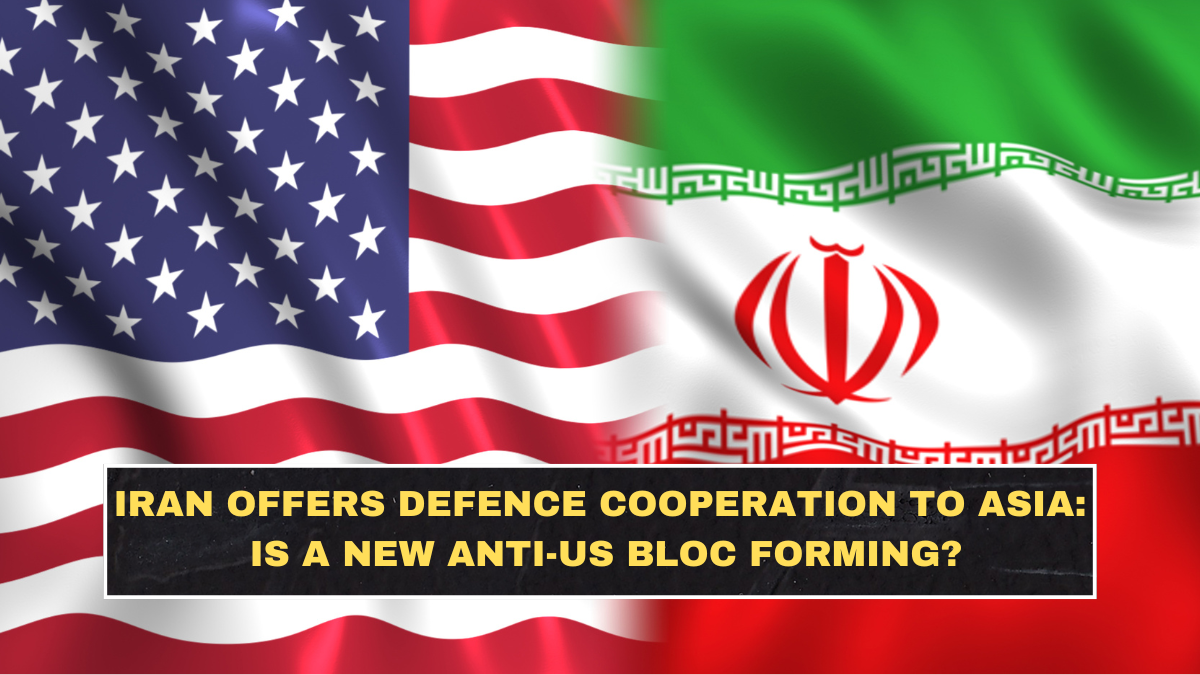
Iran says it is ready to share its defensive weapons capabilities with “independent countries,” especially members of the Shanghai Cooperation Organisation, or SCO. The statement came from Deputy Defence Minister Reza Talaei-Nik during an SCO defence ministers’ meeting in Bishkek, Kyrgyzstan. Coming after Iran’s recent conflict with the United States and Israel, the message is not subtle: Tehran wants to turn battlefield survival into diplomatic leverage.
This is not just a military offer. It is political messaging. Iran is trying to tell Asian and Eurasian partners that it resisted US and Israeli pressure and now has useful experience to share. Whether other countries fully accept that claim is a different matter. But the offer shows Iran wants to move from isolation toward a wider security network involving countries that are already uncomfortable with US dominance.
What Exactly Did Iran Say It Wants To Share?
Iran said it is willing to share defensive military capabilities and the “experiences” it claims helped it resist American pressure. Iranian state-linked reporting framed this as sharing lessons from what Tehran called America’s defeat. That wording is clearly propaganda-heavy, but the strategic point is real: Iran wants partners to see its drones, missiles, air defences, electronic warfare experience, and wartime tactics as exportable value.
The key phrase is “defensive capabilities.” Iran is using that language carefully because it wants to present itself as a state helping others protect sovereignty, not as a country exporting instability. But nobody should be naive. In geopolitics, “defensive” systems can still shift regional balances, strengthen military blocs, and worry rivals.
| Iran’s Message | What It Really Means |
|---|---|
| Share defensive capabilities | Offer military know-how, systems, or training |
| Focus on SCO partners | Build ties with Eurasian powers |
| Highlight US “defeat” | Turn war survival into propaganda value |
| Work with Russia and Belarus | Strengthen anti-Western defence links |
| Use “independent countries” language | Appeal to states resisting US influence |
Why Does The SCO Matter Here?
The Shanghai Cooperation Organisation matters because it includes major Eurasian players such as China, Russia, India, Pakistan, and Central Asian states. Iran became a full SCO member in recent years, and it now wants to use that platform for more than diplomatic symbolism. By speaking at an SCO defence meeting, Tehran is trying to make its military experience part of a broader Eurasian security conversation.
But here is the important correction: the SCO is not NATO, and it is not a clean anti-US military alliance. Its members have different interests, rivalries, and limits. India and China do not see the world the same way. Pakistan and India have their own tensions. Central Asian states often balance between Russia, China, the West, and regional priorities. So calling this a finished anti-US bloc would be premature. The better reading is that Iran is trying to push the SCO in a more anti-Western security direction.
Why Are Russia And Belarus Important In This Story?
Russia and Belarus are important because Iran’s defence outreach is not happening in isolation. Reuters reported that Talaei-Nik held talks with Russian Defence Minister Andrei Belousov in Kyrgyzstan, while Belarus also expressed interest in strengthening cooperation with Tehran. Moscow and Minsk both stressed continued cooperation with Iran as the wider conflict remained unresolved.
This matters because Russia, Belarus, and Iran already share a political interest in resisting Western pressure. Russia is under sanctions and locked in war with Ukraine. Belarus is closely aligned with Moscow. Iran is facing US and Israeli pressure. Their cooperation does not automatically create a formal military bloc, but it does create a network of states willing to exchange support, technology, training, and political cover.
Is A New Anti-US Bloc Actually Forming?
A loose anti-US alignment is forming, but calling it a single bloc may be too simplistic. Iran, Russia, Belarus, China, and some other states often oppose US pressure, sanctions, and military dominance. But their goals are not identical. China wants stability for trade and energy. Russia wants leverage against the West. Iran wants survival, sanctions relief, and regional influence. Belarus wants security through Moscow’s orbit.
So the answer is: yes, there is a stronger anti-US alignment, but no, it is not yet a unified military alliance. That distinction matters. A real bloc has shared command structures, binding defence commitments, and coordinated strategy. What we are seeing now is more flexible and opportunistic: countries cooperating where interests overlap, without fully merging their risks.
Why Would Asian Countries Be Interested In Iran’s Capabilities?
Some Asian countries may be interested because Iran has developed relatively low-cost drones, missiles, air-defence tactics, and asymmetric warfare methods under sanctions. For countries that cannot afford Western systems or do not want Western dependency, Iran’s model may look attractive. Iran has learned how to operate under pressure, absorb strikes, and use cheaper systems to challenge more advanced militaries.
But there is a catch. Buying into Iranian defence cooperation can bring diplomatic cost. Countries that work too closely with Tehran risk US sanctions, Western pressure, and regional backlash. For many Asian governments, the smart move will be cautious engagement, not open military alignment. They may listen to Iran, study its tactics, and maintain dialogue without publicly tying themselves to Tehran’s security agenda.
Why Is This Worrying For The US And Its Allies?
This is worrying because Iran is trying to turn wartime pressure into international influence. If Tehran shares drone technology, missile tactics, cyber tools, or air-defence lessons with partners, it could make future conflicts harder for the US and its allies. Even limited cooperation can spread battlefield knowledge faster than formal arms sales.
Washington will also see this as part of a bigger trend: sanctioned or anti-Western states learning from each other. Russia’s war experience, Iran’s drone and missile experience, Belarus’s military alignment with Moscow, and China’s industrial power all create a worrying ecosystem for Western planners. The danger is not one dramatic alliance announcement. The danger is steady knowledge-sharing among states already hostile to US pressure.
What Could This Mean For India And China?
India and China are both SCO members, but their reactions will not be identical. China may value Iran as an energy partner and anti-US diplomatic voice, but Beijing is usually careful not to let Iran drag it into direct military confrontation. China wants influence, not uncontrolled escalation that damages trade routes and energy flows.
India’s position is even more complicated. India is an SCO member, has ties with Iran, maintains defence links with Russia, and also works closely with the US in the Indo-Pacific. New Delhi is unlikely to openly join an anti-US military bloc. It will probably treat Iran’s offer cautiously, keeping diplomatic channels open while avoiding commitments that damage its broader strategic balance.
Could Iran’s Offer Change Regional Security?
Yes, if it becomes practical cooperation instead of rhetoric. Training exchanges, drone technology, air-defence coordination, intelligence sharing, and joint exercises could all strengthen Iran’s regional position. Even small agreements can matter if they help Iran avoid isolation or improve the capabilities of partners facing Western pressure.
However, rhetoric is easier than real defence integration. Technology transfer, logistics, interoperability, trust, financing, and sanctions exposure all create barriers. Iran can offer capabilities, but partners will decide how much risk they want to absorb. The next thing to watch is not the speech itself, but whether it leads to signed agreements, weapons transfers, joint drills, or technical teams.
Conclusion
Iran’s offer to share defensive capabilities with Asian partners is a strategic signal, not a random speech. Tehran wants to show that it survived US and Israeli pressure and can now export lessons to countries resisting Western dominance. Its talks with Russia and Belarus make the message even clearer: Iran is looking for security partners beyond the Middle East.
The blunt truth is that a formal anti-US military bloc is not fully formed yet. But a looser anti-Western defence network is becoming more visible. That may be even harder to manage because it is flexible, deniable, and built through shared interests rather than one signed alliance treaty.
FAQs
What did Iran offer to Asian partners?
Iran said it is willing to share its defensive military capabilities with independent countries, especially SCO members. Deputy Defence Minister Reza Talaei-Nik made the offer during an SCO defence ministers’ meeting in Bishkek.
Is Iran creating a new anti-US military bloc?
Not formally. Iran is trying to strengthen anti-US and anti-Western security ties, especially with countries such as Russia and Belarus, but the SCO itself is not a NATO-style military alliance.
Why are Russia and Belarus involved?
Iran’s deputy defence minister recently held talks with Russian and Belarusian defence officials. Moscow and Minsk both signalled interest in continued cooperation with Tehran, making Iran’s defence outreach look more coordinated.
Would India or China join Iran’s defence network?
India and China are unlikely to openly join an Iran-led anti-US military bloc. Both may maintain dialogue with Tehran, but they have wider strategic interests and would likely avoid commitments that create direct confrontation with Washington.