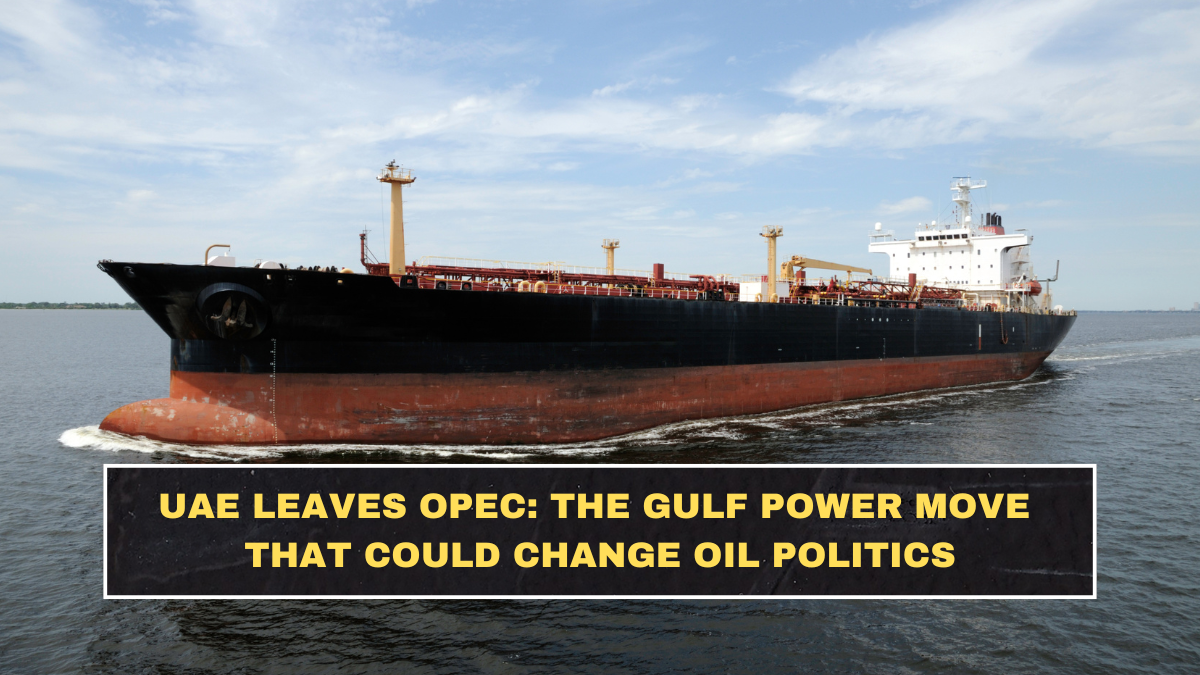
The United Arab Emirates’ decision to leave OPEC is not just another oil-market headline. It is a major geopolitical move because the UAE has been a member of OPEC since 1967, and its exit from both OPEC and the wider OPEC+ alliance is set to take effect on May 1, 2026. The announcement immediately raised questions about oil supply, Gulf politics, Saudi influence, and the future of coordinated production cuts.
For ordinary readers, the simple meaning is this: one of the Gulf’s most important oil producers no longer wants to be bound by OPEC’s collective production rules. That matters because OPEC has historically tried to manage oil prices by controlling how much oil its members produce. When a major producer steps away, the cartel’s ability to control supply becomes weaker, especially during a period when the global energy market is already under pressure.
What Exactly Did The UAE Announce?
The UAE announced that it would exit the Organization of the Petroleum Exporting Countries and the OPEC+ alliance from May 1, 2026. According to the official UAE announcement, the decision reflects the country’s long-term strategic and economic vision, its changing energy profile, and its investment in domestic energy production. In plain English, Abu Dhabi wants more freedom to shape its own oil policy.
This is important because OPEC membership is not only symbolic. Member countries often face production targets or quotas, which can limit how much oil they sell. The UAE has invested heavily in expanding production capacity, so remaining under strict quota systems may have started looking less useful for its own national goals.
| Key Point | Simple Explanation |
|---|---|
| Exit date | UAE leaves OPEC and OPEC+ from May 1, 2026 |
| Main reason | More control over national energy policy |
| Market impact | OPEC’s production discipline may weaken |
| Political impact | Saudi-UAE rivalry may become more visible |
| Consumer impact | Future oil supply could rise, but prices depend on war and shipping risks |
Why Does This Put Pressure On OPEC?
OPEC works best when members follow shared production limits. If one major producer leaves, other members may start questioning why they should keep accepting restrictions. Reuters reported that the UAE was producing around 3.4 million barrels per day before the regional conflict forced Gulf producers to curb shipments, making it one of OPEC’s largest producers.
That is why this move hurts OPEC beyond numbers. It sends a signal that even powerful Gulf producers may no longer see the cartel as the best vehicle for their national interests. If more members decide that independent production is better than collective discipline, OPEC’s influence over global oil prices could slowly decline.
Is This Really About Oil Or Gulf Power Politics?
Officially, the UAE has framed the decision around long-term strategy and energy policy. But it would be naive to ignore the political layer. Saudi Arabia has long been seen as OPEC’s de facto leader, and the UAE’s decision weakens a system where Riyadh has traditionally held major influence over oil-market coordination.
The UAE and Saudi Arabia are partners in many areas, but they are also competitors. Both want regional influence, investment leadership, and global relevance. Oil policy is one part of that bigger rivalry. The UAE’s exit does not mean an open break with Saudi Arabia, but it does show that Abu Dhabi is willing to act independently when its economic interests are not fully aligned with Riyadh’s.
Will Oil Prices Rise Or Fall After The UAE Exit?
The short-term answer is complicated. Normally, a major producer leaving OPEC could be bearish for oil prices because it may eventually allow more supply into the market. However, the current energy situation is not normal. HSBC reportedly sees limited near-term impact because disruptions around the Strait of Hormuz are already restricting Gulf oil shipments.
The bigger impact may come later. If shipping routes stabilize and the UAE increases output beyond old quota limits, more oil could enter the market. That could put downward pressure on prices, especially if demand weakens or other non-OPEC producers also increase supply. But if regional conflict continues, any extra production capacity may not immediately translate into cheaper fuel for consumers.
Why Does The Strait Of Hormuz Matter Here?
The Strait of Hormuz is one of the world’s most important oil chokepoints because a large share of Gulf oil exports passes through it. If that route is disrupted, producers may struggle to ship oil even if they have the capacity to pump more. That is why analysts are cautious about predicting an immediate oil-price crash after the UAE’s OPEC exit.
The UAE does have alternatives, including routes that can move some crude outside the Gulf. But alternatives are not unlimited. If Hormuz risk remains high, the UAE’s freedom from OPEC quotas may matter more in theory than in immediate market reality. This is the part many dramatic headlines miss: leaving OPEC gives policy freedom, but geography still controls how much oil can reach buyers.
Why Could This Be Seen As A Win For The United States?
The UAE’s exit may indirectly benefit the United States because Washington has often criticized OPEC for keeping oil prices high through production cuts. If OPEC’s unity weakens, it becomes harder for the cartel to collectively restrict supply. That could help oil-consuming countries if it eventually leads to more barrels in the market.
But calling it a clean American win would be too simplistic. If the Gulf remains unstable and shipping routes stay risky, consumers may not feel much relief. The real benefit for the US is strategic: a weaker OPEC means less coordinated oil power concentrated in the hands of a few producer states.
What Is The Bottom Line?
The UAE leaving OPEC is a major moment because it combines oil, money, power, and Gulf rivalry in one decision. It weakens OPEC’s image of unity, challenges Saudi Arabia’s leadership inside the oil cartel, and gives Abu Dhabi more room to pursue its own energy strategy. The move may not immediately lower fuel prices, but it changes the long-term balance of oil politics.
For readers, the key takeaway is simple: this is not only about petrol prices. It is about who controls the future of energy influence. The UAE is betting that independence will serve it better than cartel discipline. OPEC now has to prove that it can still matter without one of its most important Gulf producers.
FAQs
When Will The UAE Officially Leave OPEC?
The UAE’s exit from OPEC and OPEC+ is effective from May 1, 2026, according to the official announcement reported by UAE state media.
Why Did The UAE Leave OPEC?
The UAE says the decision is linked to its long-term strategic and economic vision, including greater investment in domestic energy production and a changing energy profile.
Will UAE Leaving OPEC Reduce Oil Prices?
Not immediately in a guaranteed way. Prices still depend on war risks, demand, shipping disruption, and whether the UAE can actually increase exports once routes stabilize.
Is This Bad News For Saudi Arabia?
Yes, strategically it is uncomfortable for Saudi Arabia because OPEC’s influence depends heavily on unity, and the UAE was one of the group’s most important producers.
Does This Mean OPEC Is Finished?
No, OPEC is not finished overnight. But the UAE’s exit is a serious warning that the cartel’s ability to control oil markets may be weakening.